
Short Description
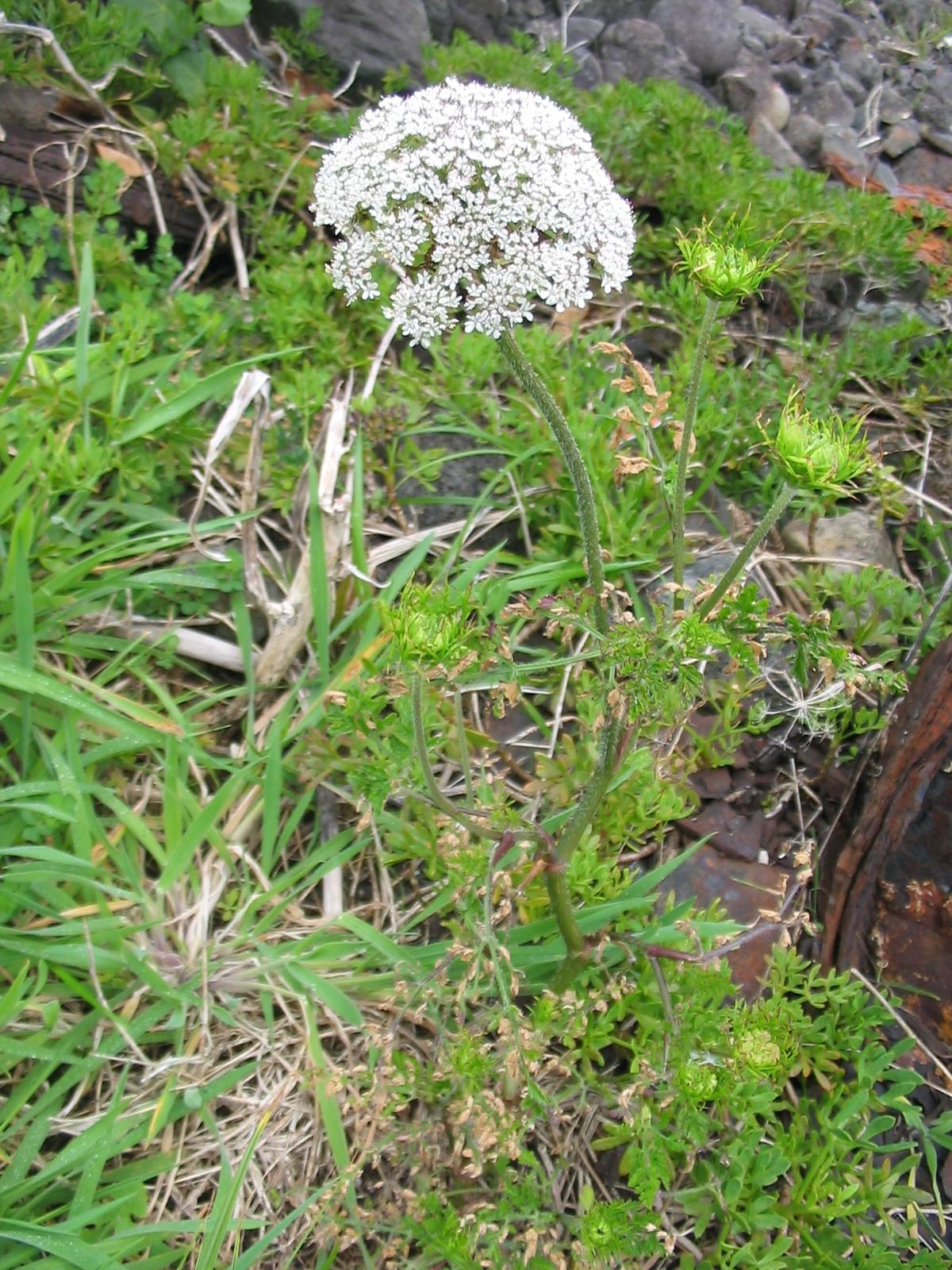
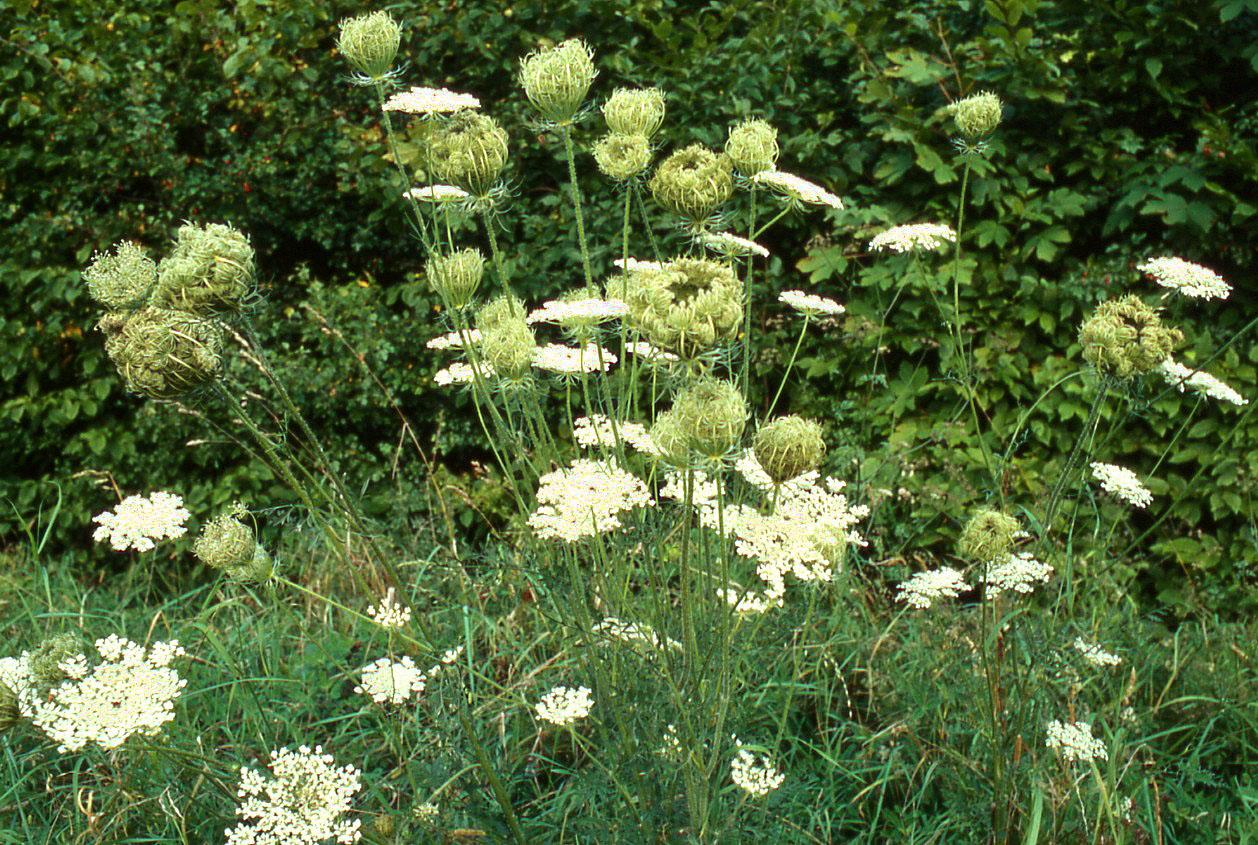
Wild carrot can grow to a height of 1.2 m.
The leaves are divided into two or four leaflets (two- to four-pinnate) and covered in bristly hairs.
The stem is grey-green and generally covered in bristly hairs.
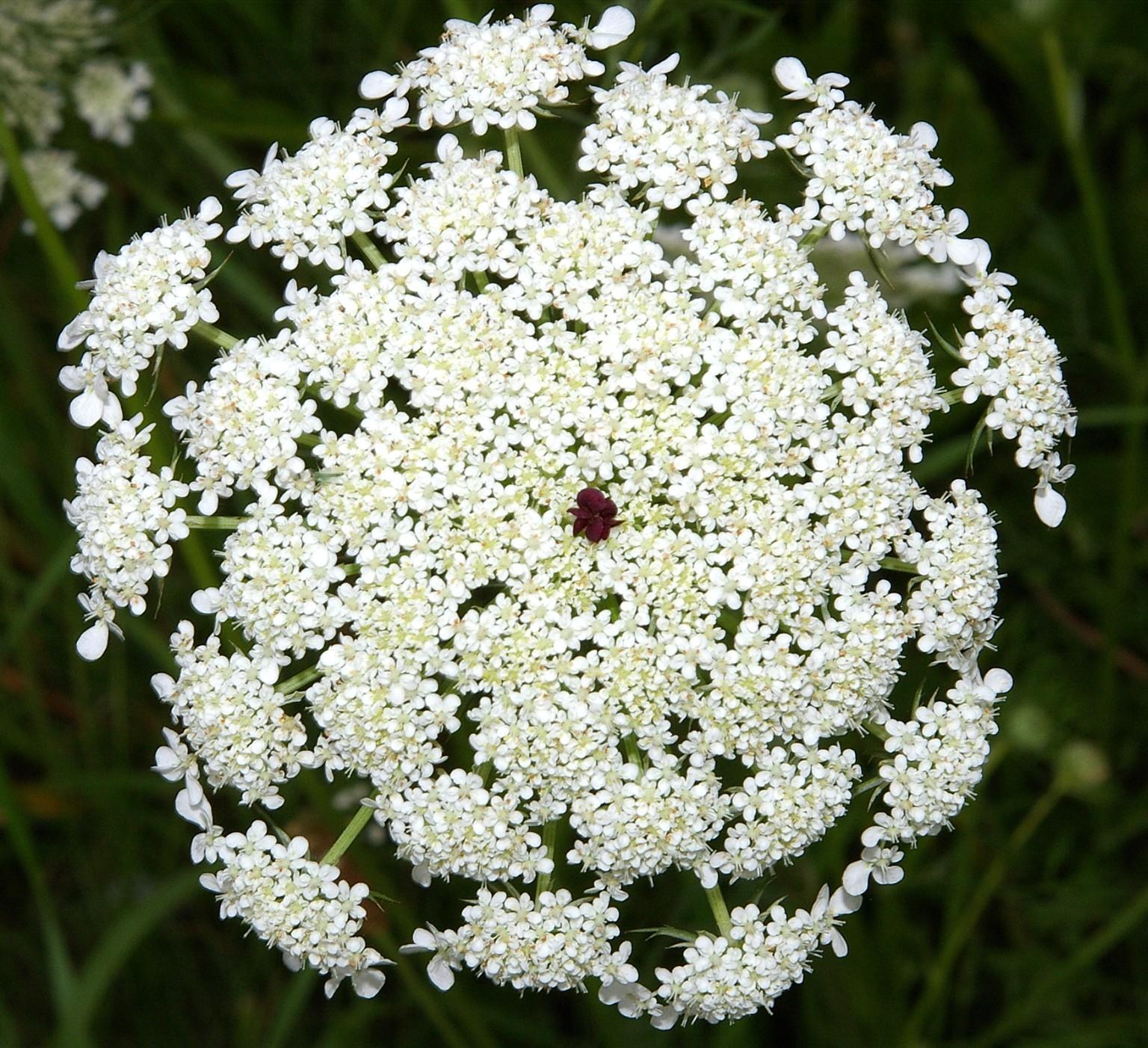
The individual small white flowers are clustered in double umbels (flower heads). This means that each branch of the umbel (like ribs of an umbrella) is again tipped with a smaller umbellule. At the centre of the flower head is a dark spot in the middle of the flower head, i.e. an individual reddish or purple floret. As the seed develops, the seed head curves inwards to form a kind of nest.
The fruit consists of two mericarps with a bristly surface.
Features
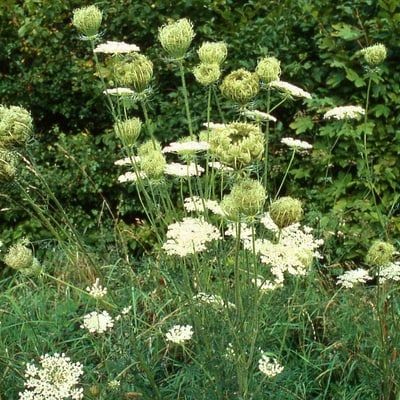
Wild carrot
Daucus carota
dark spot in the middle of the flower head
Similar species
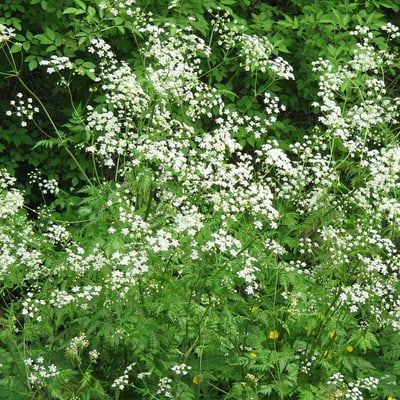
Cow parsley
Anthriscus sylvestris
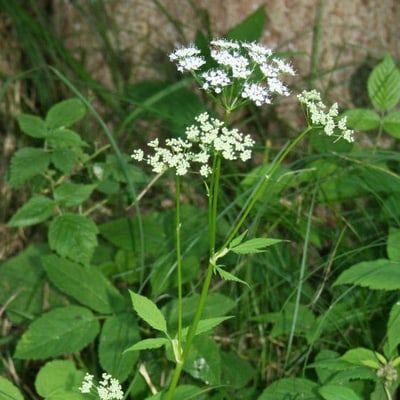
Ground elder
Aegopodium podagraria
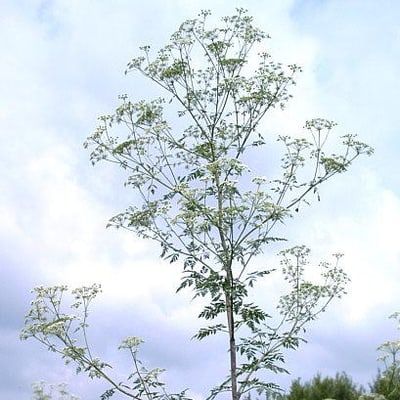
Hemlock
Conium maculatum
In the city
In an urban environment, wild carrots often grow on wasteland, railway land and meadows. It prefers dry, chalky sites.
Fun Facts
ild carrot is a parent form of the garden carrot which is a very popular and widely used food item.
The pale root of the wild carrot has fewer pigments than garden carrots. These pigments (carotenes) is a preliminary stage to vitamin A, which is important for numerous functions within the body.
Wild carrot leaves are an important food plant for the caterpillars of the swallowtail butterfly.
The darker floret in the centre of the umbel is supposed to look like a fly in order to attract further flies and thus potential pollinators.
It flowers from June to September.
- Endangerment level Germany: not endangered
The roots are edible.
Sources
Habitus, Ixitixel, CC BY-SA 3.0, https://commons.wikimedia.org/wiki/File:Daucus_Carota_ssp_azorica_(Habitus).jpg
.jpg)
Habitus, Christian Fischer, CC BY-SA 3.0, https://commons.wikimedia.org/wiki/File:Daucus_carotaA.jpg

Blütenstand, Christian Fischer, CC BY-SA 3.0, https://commons.wikimedia.org/wiki/File:Daucus_carotaB.jpg

Eggenberg, S. & Möhl, A. (2007) Flora Vegetativa: Ein Bestimmungsbuch für Pflanzen der Schweiz im blütenlosen Zustand, Bern, Stuttgart, Wien: Haupt Verlag.
Spohn, M., Golte-Bechtle, M. & Spohn, R. (2015) Was blüht denn da? Stuttgart: Franckh Kosmos Verlag.
Jäger, E. J. (2011) Rothmaler - Exkursionsflora von Deutschland. Gefäßpflanzen: Grundband, Heidelberg: Spektrum Akademischer Verlag.
Kammer, P. M. (2016) Pflanzen einfach bestimmen. Schritt für Schritt einheimische Arten kennenlernen, Bern: Haupt Verlag.
Lippert, W. & Podlech, D. (1993) GU Naturführer. Blumen: die wichtigen Blütenpflanzen Mitteleuropas erkennen und bestimmen, München: Gräfe und Unzer Verlag.
Schauer, T., Caspari, C. & Caspari, S. (2015) Der illustrierte BLV-Pflanzenführer für unterwegs. 1150 Blumen, Gräser, Bäume und Sträucher, München: BLV.
Page „Wilde Möhre“. : Wikipedia, The Free Encyclopedia. Date of last revision: 18.12.2016, 22:07 UTC. URL: https://de.wikipedia.org/w/index.php?title=Wilde_M%C3%B6hre&oldid=160791059 (Accessed: 13.03.2017).