
Short Description
The Norway maple can grow up to 35 m tall. In rare instances, it can also grow as a shrub.
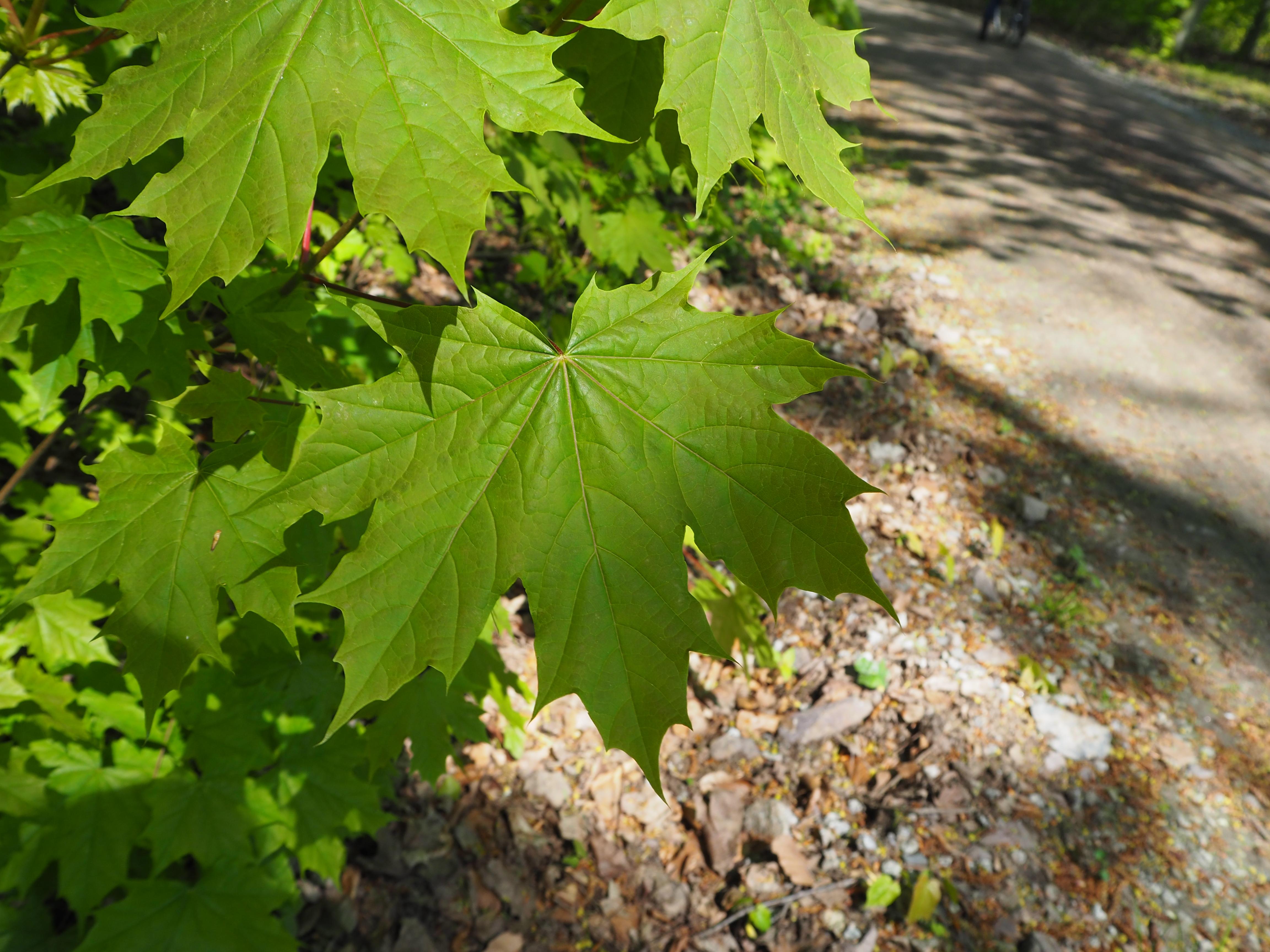
The leaves have long stalks and grow oppositely on the branch. They are generally palmately lobed and hairless. The leaf margins are finely serrated. The leaf stalk contains a milky sap.
The bark is light grey and smooth initially, later turning dark grey with vertical fissures.
The flowers are yellow-green and clustered in drooping panicles (flower heads).
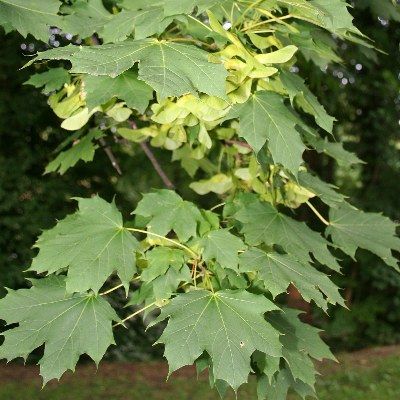
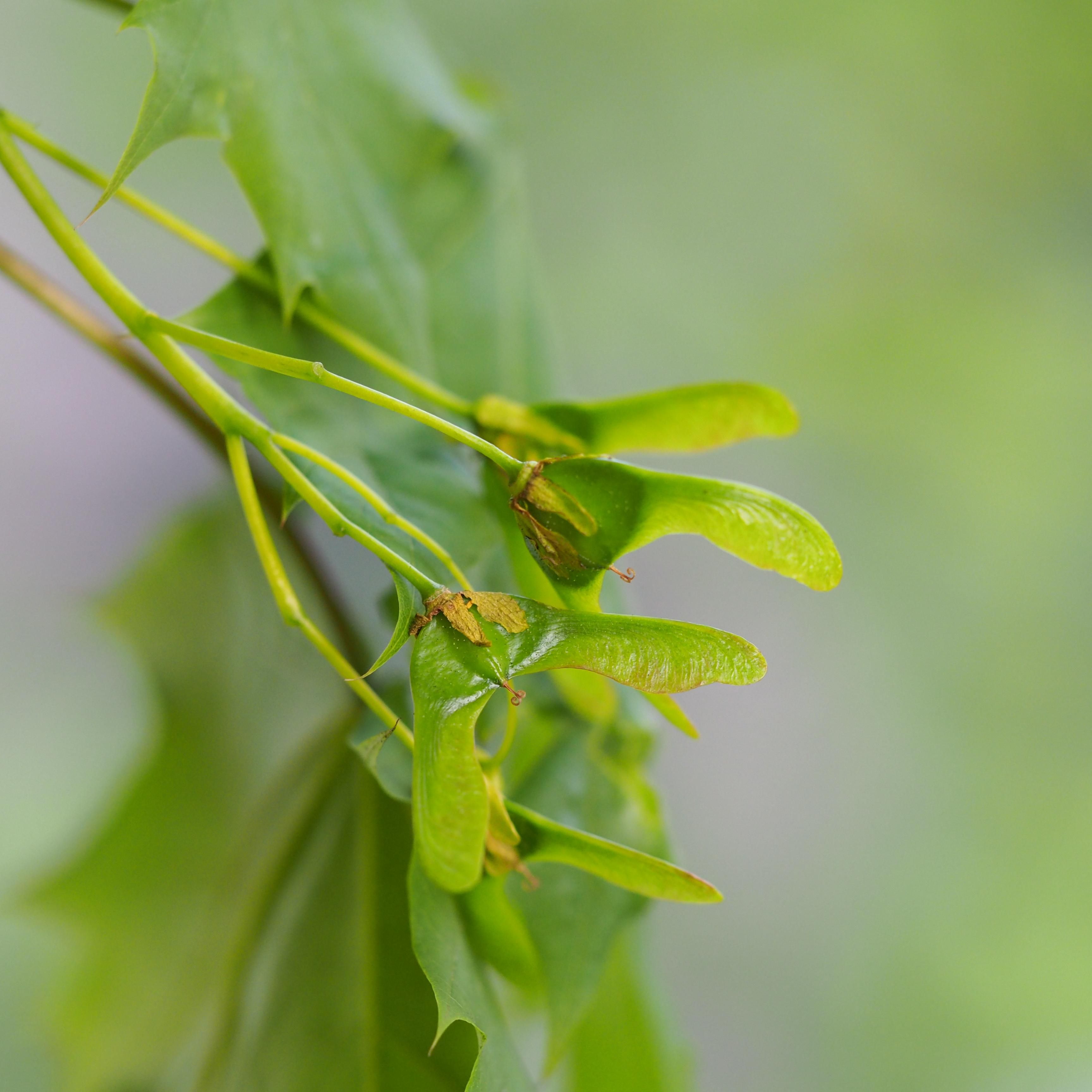
The fruit is a winged nut fruit consisting of two mericarps. The wings of the fruits are at an obtuse angle to each other.
Features
Norway maple
Acer platanoides
sharply serrated leaf margin
leaf stalk with a milky sap
wings of the fruits at an obtuse angle to each other
Similar species
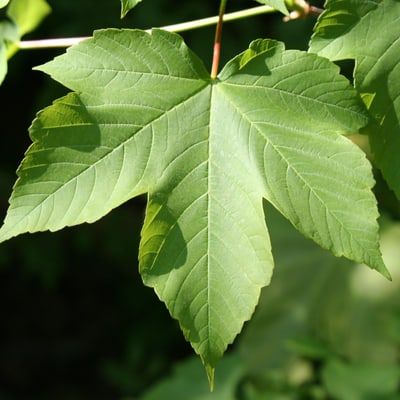
Sycamore
Acer pseudoplatanus
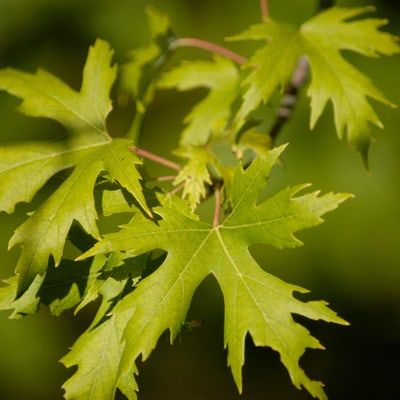
Silver maple
Acer saccharinum
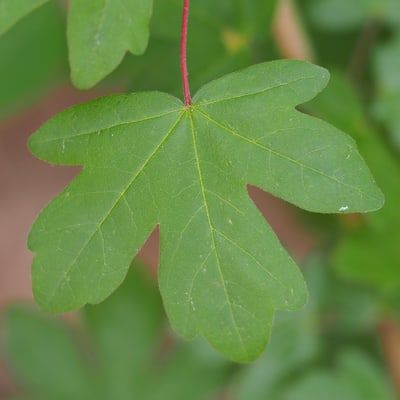
Field maple
Acer campestre
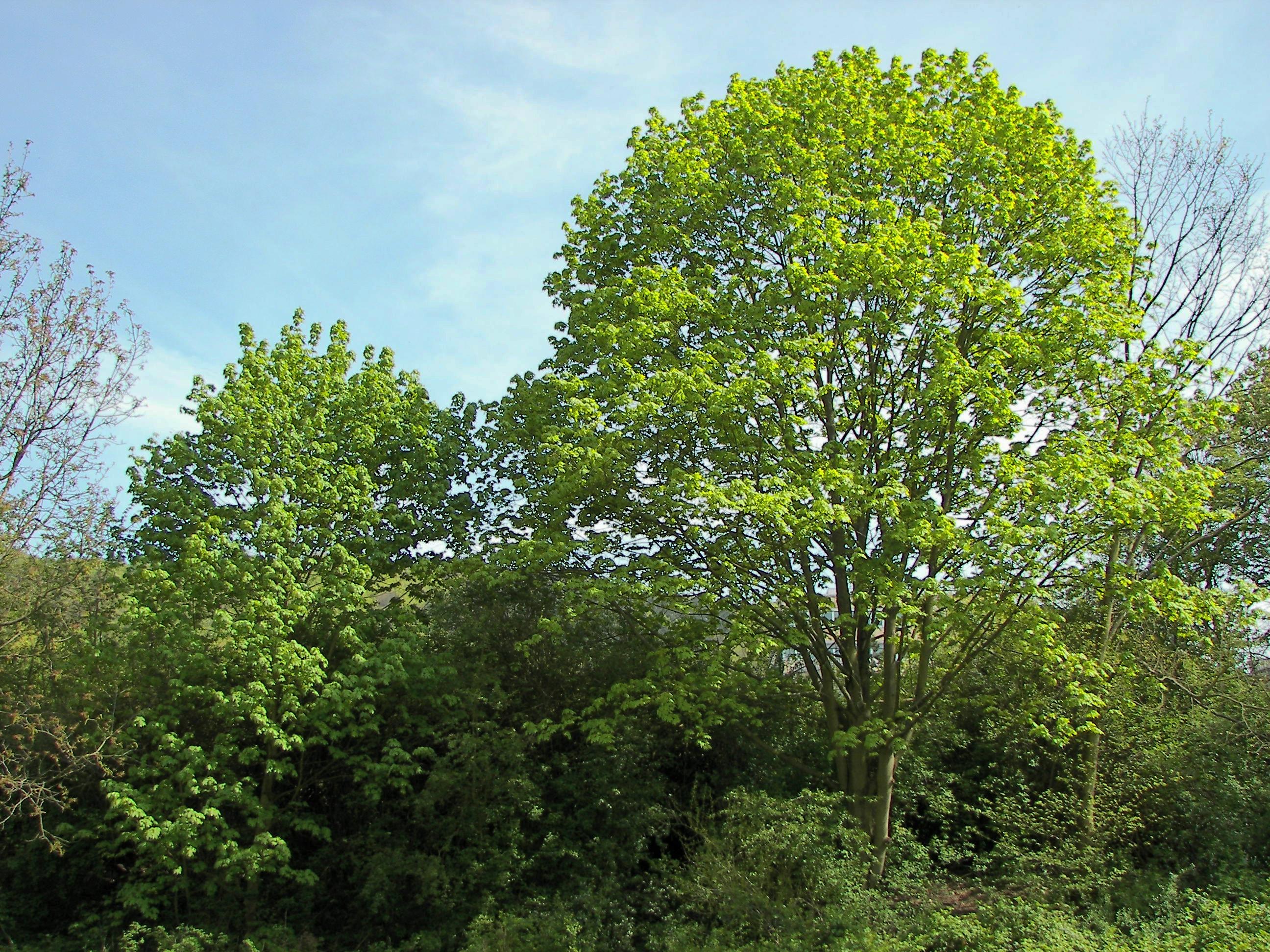
In the city
The norway maple is a suitable and frequent park and street tree. Maple species produce numerous fruits, so that the trees can spread well on their own within the city. An important ecological achievement of norway maple is discussed as its potential to improve urban air quality by binding particulate matter.
Fun Facts
Before the leaves appear, the numerous flowers of the norway maple herald the coming of spring.
The flowers of maple species are usually hermaphroditic, i.e. a flower contains female parts and male parts. However, there are unisexual flowers, i.e. there are only female or male parts. The reason for this is the evolution from insect pollination of hermaphrodite flowers to wind pollination of unisexual flowers.
It flowers from April to May.
The fruit ripening season is from September to October.
- Endangerment level Germany: not endangered
- Usage:
Its leaves, twigs and syrup are used in natural medicine because of their supposed anti-inflammatory effect.
Sources
Blatt, Alice Kracht, CC BY-SA 4.0, http://species-id.net/openmedia/File:Acer_platanoides_%286%29.JPG
.JPG)
Habitus, Willow, CC BY-SA 2.5, https://commons.wikimedia.org/wiki/File:Acer_platanoides_002.jpg

Frucht, Alice Kracht, CC BY-SA 4.0, https://offene-naturfuehrer.de/web/Datei:Acer_platanoides_(15).JPG
.JPG)
Aas, G. & Riedmiller, A. (2002) Laubbäume. Bestimmen – Kennenlernen – Schützen, Bindlach: Gondrom Verlag.
Amann, G. & Richter, P. (1962) Bäume und Sträucher des Waldes, Melsungen: Verlag J. Neumann – Neudamm.
Forum DIE GRÜNE STADT (2013) Bäume und Pflanzen lassen Städte atmen. Schwerpunkt - Feinstaub, URL: https://www.die-gruene-stadt.de/baeume-und-pflanzen-lassen-staedte-atmen.pdfx (Accessed: 02.08.2018).
Umweltforschungszentrum Leipzig - Halle GmbH, Sektion Biozönoseforschung (n.d.) Datenbank biologisch-ökologischer Merkmale der Flora von Deutschland, URL: www.biolflor.de (Accessed: 20.04.2016).
Page „Acer platanoides“. : Wikipedia, The Free Encyclopedia. Date of last revision: 30.03.2009, 14:16 UTC. URL: https://de.wikipedia.org/w/index.php?title=Acer_platanoides&oldid=58492183 (Accessed: 12.04.2016).